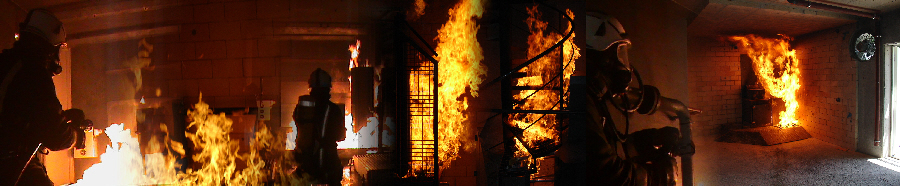



Fortunately, many dedicated Industrial, Offshore & Onshore Oil & Gas (including Refinery, NGL and LNG Plant) Fire Crews rarely have a chance to actually have to use their skills in a real incident. However, the potential of huge damage at such installations is very significant indeed, and there have been many tragic incidents, around the world, where this has been shown to be the case.
The key to minimize the spread of a fire at such a critical installation is frequent
training using a safe, realistic, fully variable Hot Fire Training System. By “fully
variable” we mean that the same Training System may be used many times and the fire
scenario varied to stretch and develop the skills of the fire fighter. This will
prevent complacency and over-confidence in the fire crew.
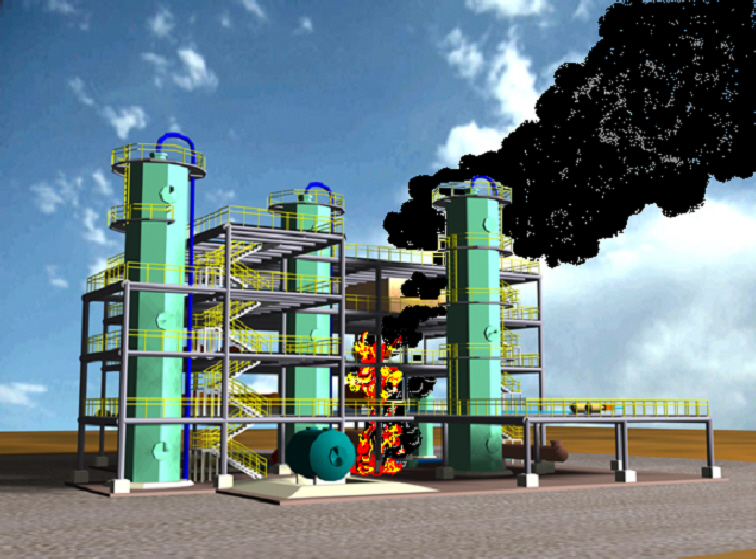
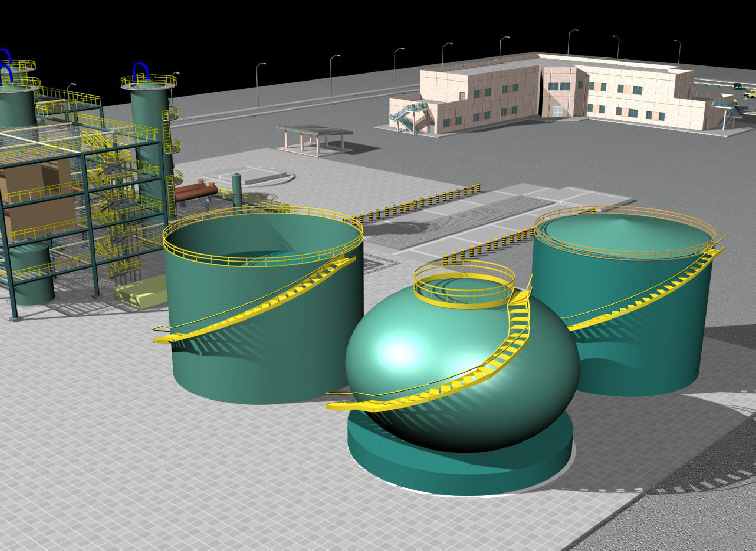
You must also incorporate all potential fire locations and situations, such as fuel spill fire, flange fire, valve fire, storage tank and “rim seal” fire, workshop fire and drill floor fire. One must also not forget than most offshore oil rigs and platforms and some large industrial plants have enclosed accommodation/offices and galley/kitchens which present their own particular problems. The fire props reach from processing plants over horizontal and vertical tanks up to fuel pumps and generator stations.
The potential presence of highly toxic gases and large volumes of smoke will further complicate the firefighting efforts. Correct containment of the fire can be vitally important in relation to LNG plants, Oil & Gas storage tank farms and offshore platforms and must also be trained very well.
The Fire Training System may be located at a fixed and dedicated Fire Training Ground,
Containerized - 20ft or 40ft depending on the number of fire scenarios and props
or even a mobile unit.
Oil & Gas (Including Refinery) and Industrial Fire Fighting