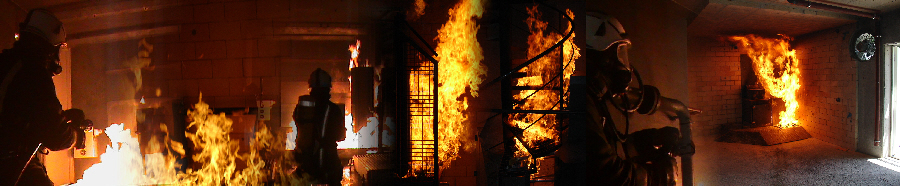



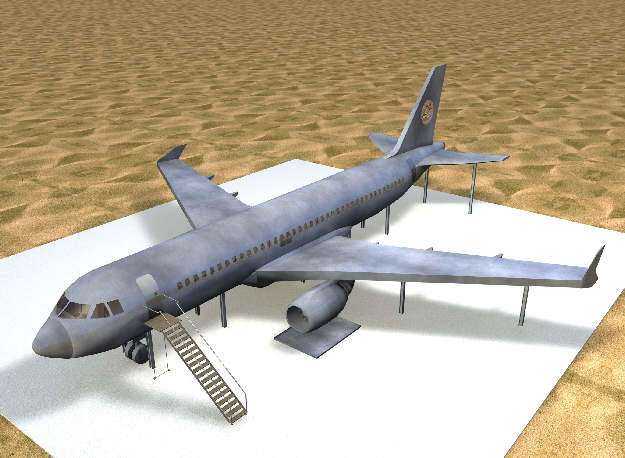
ICAO regulations require real fire training on aircraft most frequently landing at any given airport. This means that a “mock up” is normally created to incorporate key features of aircrafts most frequently utilizing that airport and the size of the fire training facility depends on the category classification of an airport.
We work very closely with the aircraft manufacturers to ensure that all dimensions, location of key safety devices and operation of emergency doors, hatches etc are as per original.
We can simulate any type of fire scenario!
For example:
- Wheel and brake
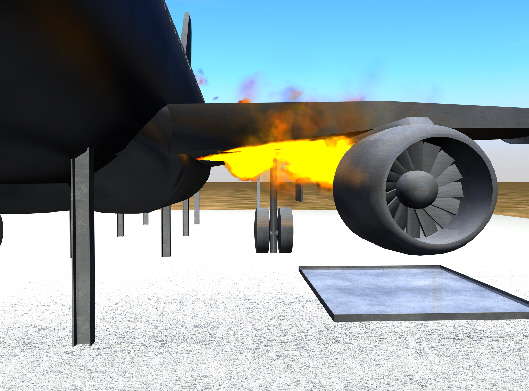
- Main engine
- APU
- Wing tank
- Cabin seat
- Overhead bin
- Galley
- Toilet
- Cockpit
- Cargo fire
Of course we can even simulate a main cabin Flashover, Rollover and large fuel spills.
Computer controlled training systems allow us to vary fully the parameters of the
fire (fire intensity, smoke generation / opacity, etc) and to monitor the effectiveness
of the fire fighting operation and we can pre-programme to cause the fire to spread
– from wheel and brake to wing fire to fuel spill fire for example or seat fire to
overhead bin to cabin rollover – should the fire fighting technique be incorrect
or ineffective.
Full computer diagnostics allow us to monitor the structural integrity of the Fire Training System and ensure maximum safety for the fire fighters.
Increasingly larger aircraft with greater numbers of pax on board means that the fire fighting techniques must be optimized to prevent serious loss of life.
Thermovision cameras at hot spots allow full view of trainees and instructors in operation.
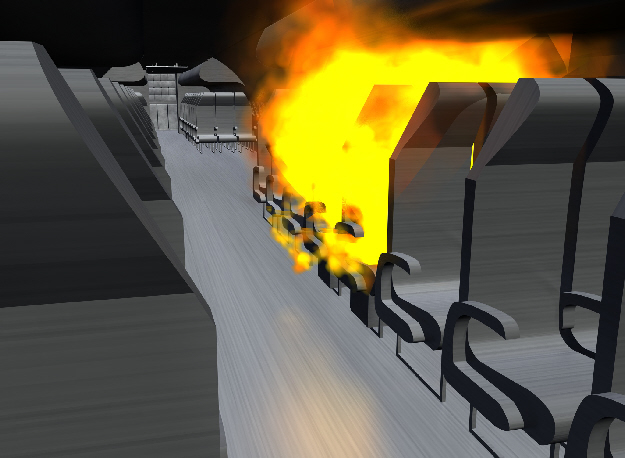
Aircraft Fire Training -